automation hub
- role
- Product direction, Product design, Prototyping, Engineering
- date
- Apr – Sep 2025
- team
- Applied AI
- my part
- I initiated the prototype that set direction, presented it to leadership, then helped design and implement the product after it was greenlit.
overview
Block released goose to the open source community in early 2025. Inside the company, the next question was what work should look like when agents could act across tools.
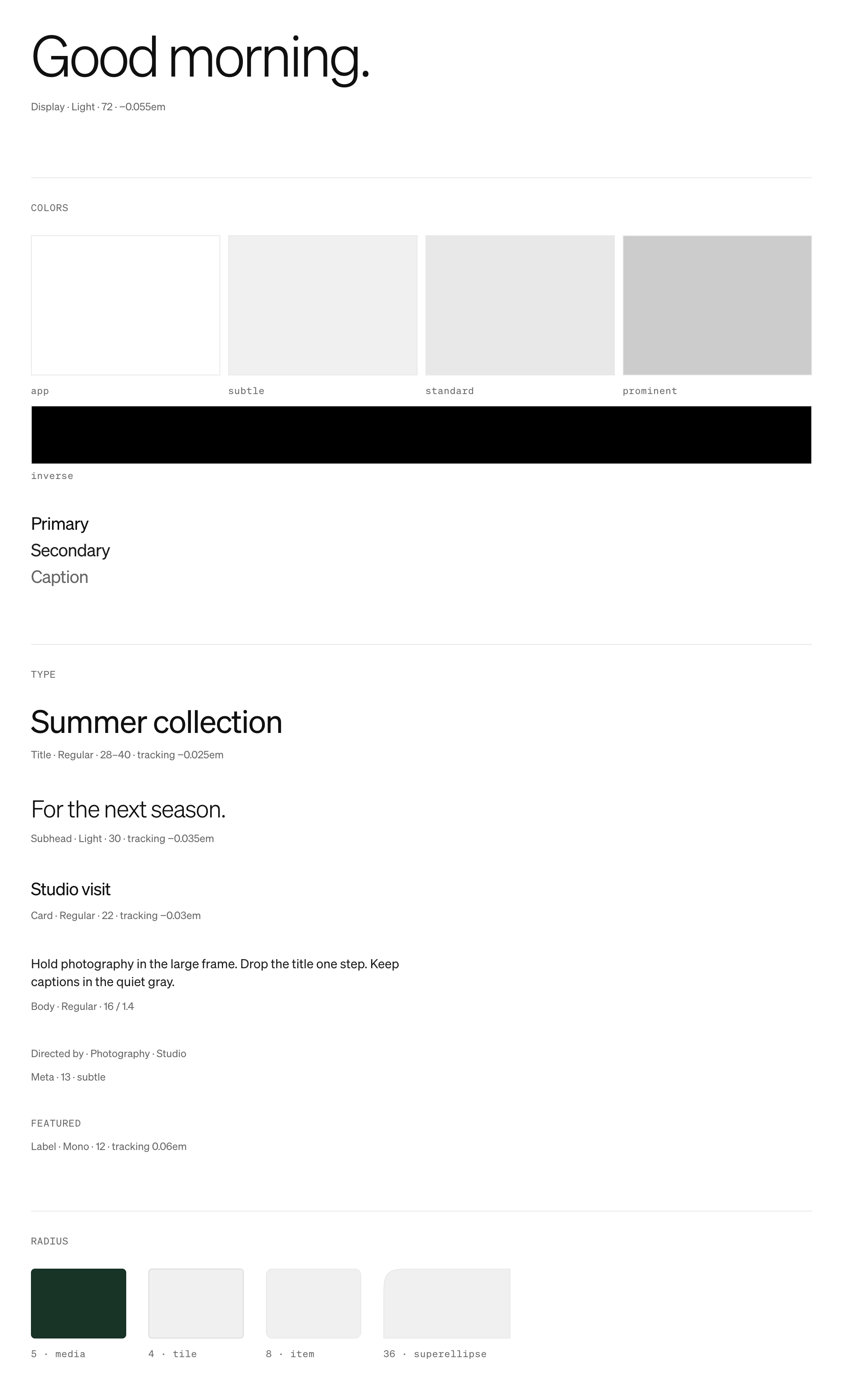
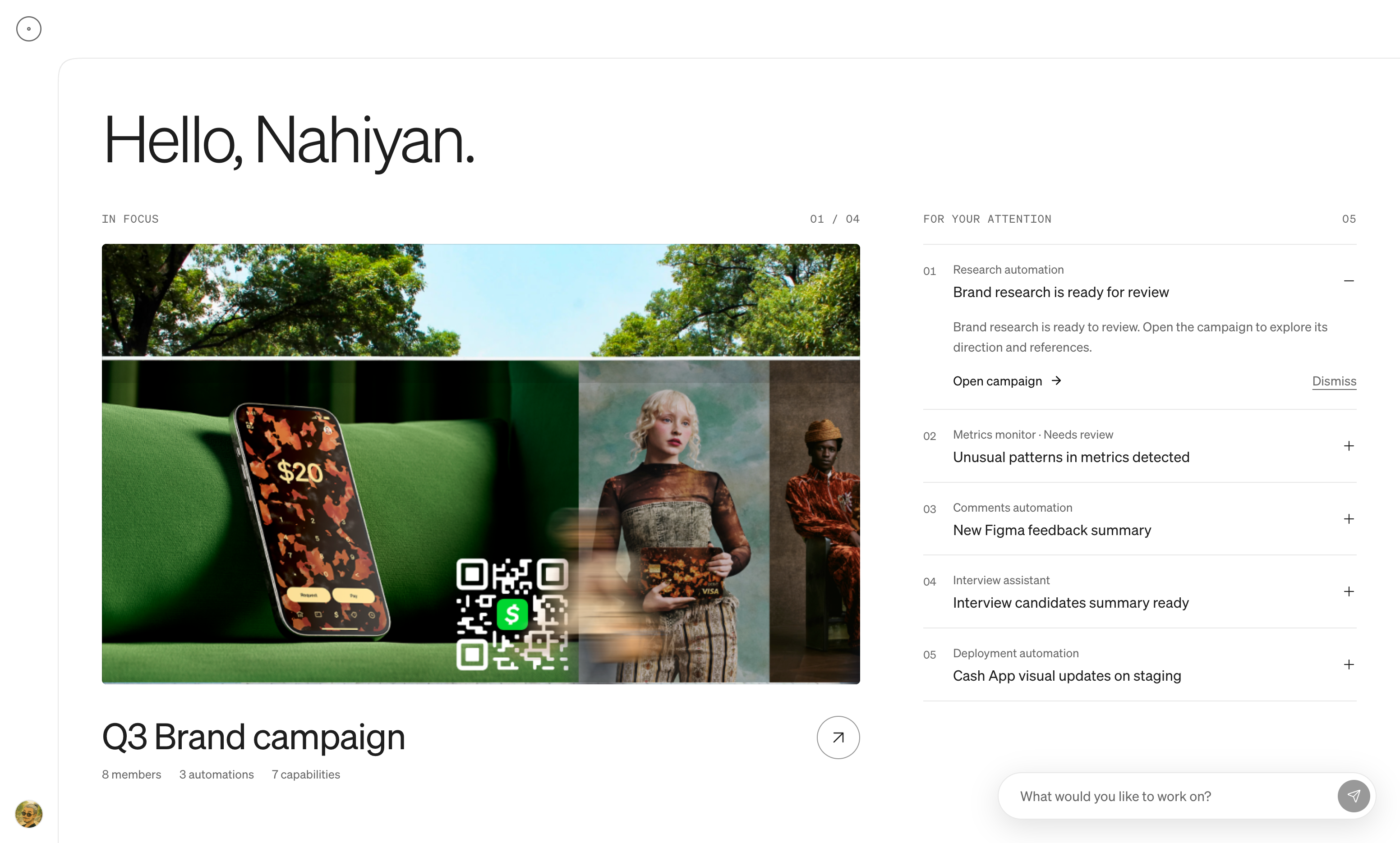
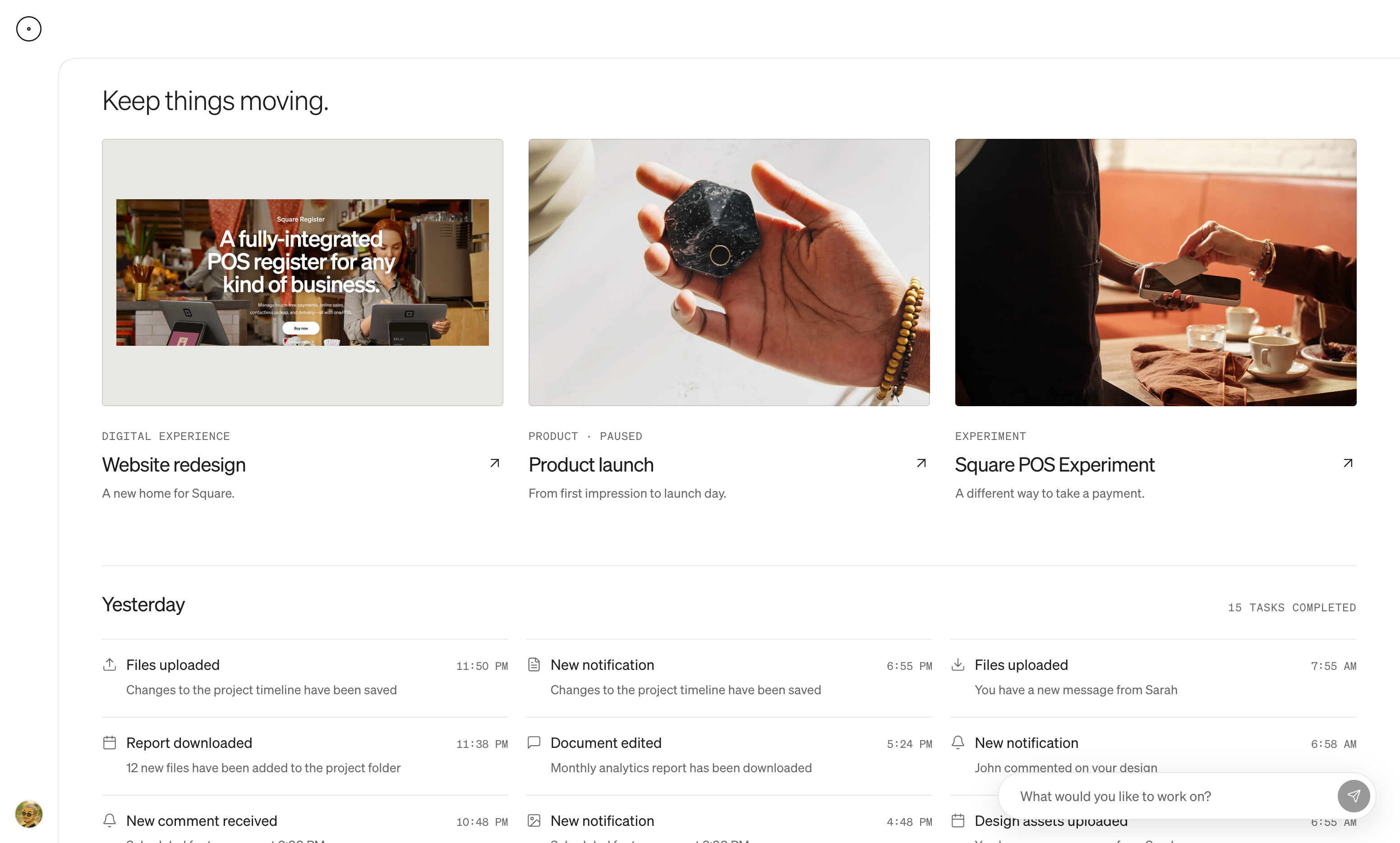
People were already running agents, but the interface still treated work as a conversation. The actual work lived elsewhere: in tools, accounts, projects, and half-finished tasks. A blank prompt made the person invent the next step. I wanted the system to show the work already underway, then ask for judgment.
I made a self-initiated prototype for that shift: a hub where you arrived to work already in progress, reviewed what needed attention, and steered from there.
I also created Substrate, a visualization of a company running on automations. It showed how people, projects, agents, and tasks could connect behind the hub.
mandate
The prototype was meant to set direction, not become the product unchanged. Jack greenlit the project with a three-month launch window. That forced the real work: deciding what should survive contact with launch and what should stay a provocation.
the grid
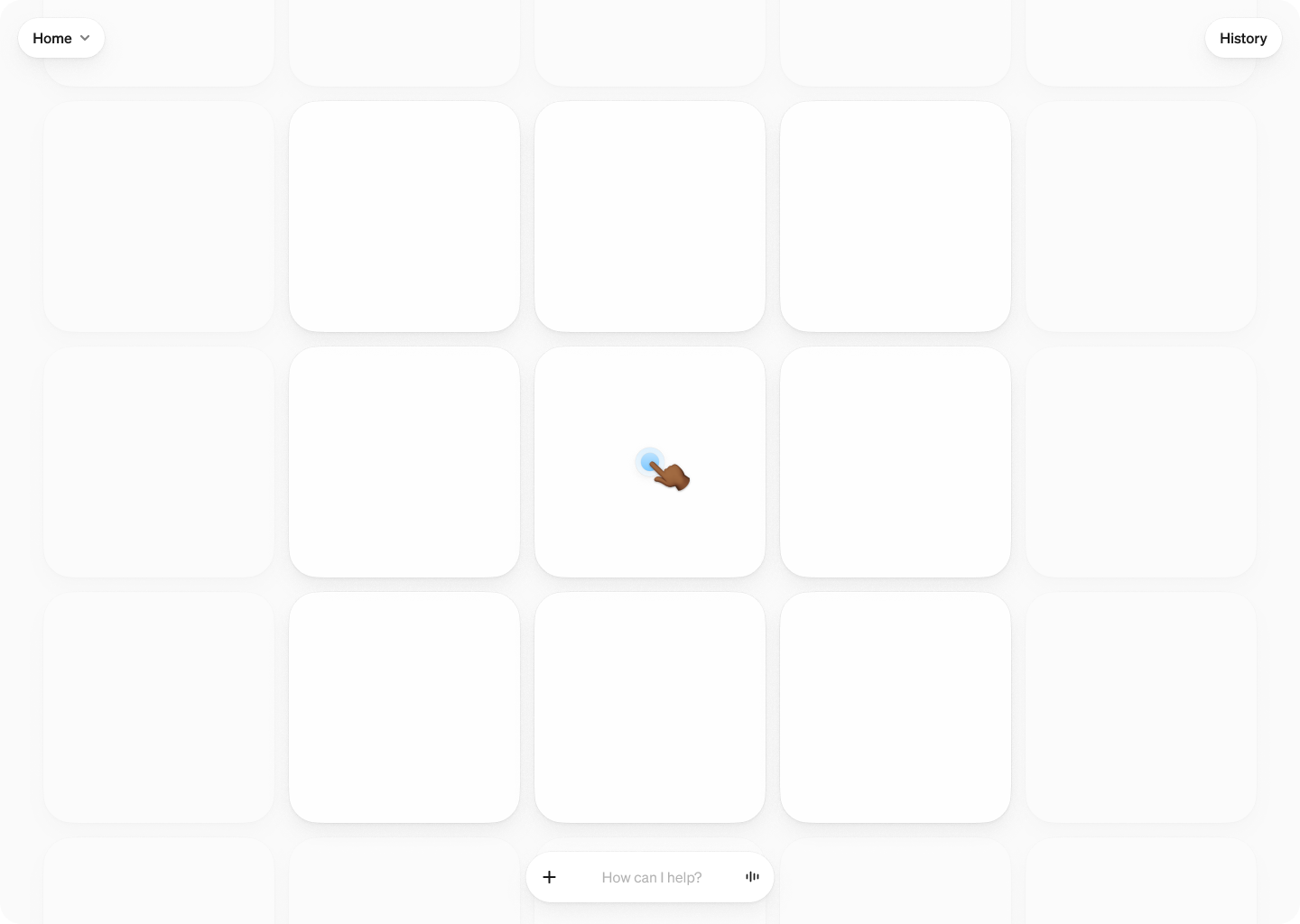
The next question was control. If the hub showed many streams of work, people needed a way to arrange attention without turning the product into another dashboard. One direction was a grid of tiles: pin what mattered, rearrange the surface, and expand a tile to work inside it.
I built the interaction prototype around two risks: whether people would understand what could move or resize, and whether the surface would become harder to read as it filled up.
I used a wrapped, virtualized grid so the canvas could feel larger than the viewport without drawing everything at once. The motion work was about legibility: drag momentum, deceleration, give on release, and resizing that snapped without feeling rigid.
containment
The open canvas felt good in the hand and worse as a work surface. Reviewing ongoing work requires orientation: where to look, what changed, what needs a decision. The infinite canvas worked against that.
For launch, we kept the tiles and pinned views, but bounded the surface. People could still arrange their work. They no longer had to navigate the container before they could judge the work inside it.
In the final launch stretch, my job was to protect the direction while the product compressed: what stayed, what got bounded, what could be demoed, and what had to wait.
what shipped
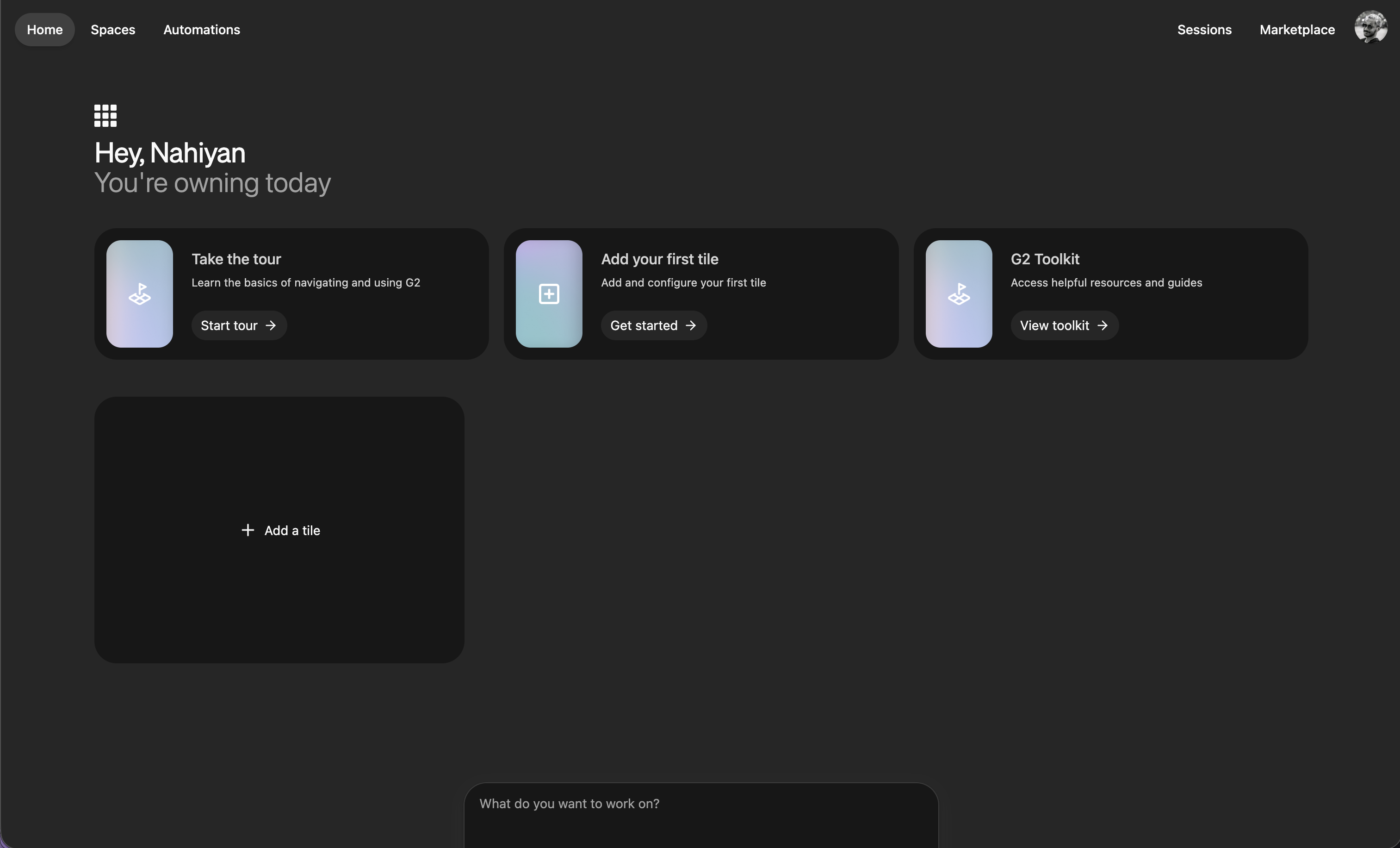
We launched the hub in September 2025. People could arrive to work already in progress, review what needed attention, and act from one place. One early user used it to summarize to-dos across platforms. That was the point of the hub at a smaller scale: scattered work pulled into a surface for judgment.
65% weekly company adoption after launch
kudos
from early users inside Block
- “Hey Team... Loving G2!”
- “This is an absolute game changer, solving for some insanely manual work... I would love to be able to experiment with G2 tiles”
- “it's so amazing to see all of the g2 activity since it was launched!”
- “G2 looks really cool 😍”